Archives
- 2026-10
- 2026-09
- 2026-08
- 2026-07
- 2026-06
- 2026-05
- 2026-04
- 2026-03
- 2026-02
- 2026-01
- 2025-12
- 2025-11
- 2025-10
- 2025-09
- 2025-03
- 2025-02
- 2025-01
- 2024-12
- 2024-11
- 2024-10
- 2024-09
- 2024-08
- 2024-07
- 2024-06
- 2024-05
- 2024-04
- 2024-03
- 2024-02
- 2024-01
- 2023-12
- 2023-11
- 2023-10
- 2023-09
- 2023-08
- 2023-07
- 2023-06
- 2023-05
- 2023-04
- 2023-03
- 2023-02
- 2023-01
- 2022-12
- 2022-11
- 2022-10
- 2022-09
- 2022-08
- 2022-07
- 2022-06
- 2022-05
- 2022-04
- 2022-03
- 2022-02
- 2022-01
Beside estrogen several classes of
2024-01-24
Beside estrogen, several parecoxib of compounds have shown significant neuroprotective efficacy when administered shortly after the induction of animal models of stroke, including glutamate (NMDA) receptor antagonists and zinc chelators [25], [26], [27]. Effects of these or other neuroprotective ag
e3 ligases br Introduction Heart failure HF is a
2024-01-24
Introduction Heart failure (HF) is a chronically progressive disease and one of the most important causes of morbidity and mortality worldwide despite recent improvements in its treatment [1], [2], [3]. The mortality and morbidity benefits of angiotensin converting enzyme inhibitor (ACEI) are wel
Ultracentrifugation of AD brain was reported to remove
2024-01-24
Ultracentrifugation of AD (R)-baclofen was reported to remove >99.95% of Aβ, while only reducing seeding capacity by 70% (Langer et al., 2011). This suggests that the most potent seeding Aβ species are relatively small soluble oligomers rather than larger insoluble fibrils. It was also noted that t
Similar to Cys Met can undergo
2024-01-24

Similar to Cys, Met can undergo ROS-mediated oxidation to Met sulfoxide, which can result in changes in protein conformation and activity [43]. In our results, the Met content in wild ginseng is higher compared to cultivated ginseng (1.3 times, Table 1). Met is a substrate for the synthesis of vario
Furthermore we found up regulated protein and mRNA levels
2024-01-23

Furthermore, we found up-regulated protein and mRNA levels of adenosine kinase in mouse retina with TON. The up-regulation of ADK was previously demonstrated in diabetic retinopathy (Pang et al., 2010). Greater levels of ADK in activated macrophages and microglial cells abrogate the immune response.
The scattering operators associated to are
2024-01-23
The scattering operators associated to are defined as follows: for any and , , , there exists a unique solution to the following equation such that Then the scattering operator is defined by Here is an elliptic pseudodifferential operator of order , which is conformally covariant on the boundary.
The altered frequency of CD
2024-01-23
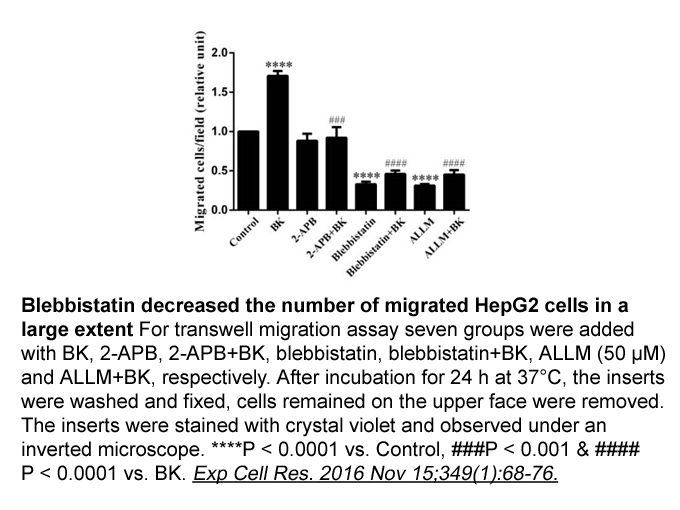
The altered frequency of CD4+ T (S)-Crizotinib in 5-LO−/− mice led us to hypothesize that these leukocytes could be exerting a primary control of the inflammatory response. In fact, the lack of 5-LO resulted in the accumulation of CD4+CD25+ cells expressing Treg markers. It is plausible to speculate
The skin permeability barrier is important for the preventio
2024-01-23

The skin permeability barrier is important for the prevention of loss of water and electrolytes from inside the body and for protection against the invasion of external pathogens, allergens, and harmful compounds. Multi-layered lipids, called lipid lamellae, are present in the outermost cell layer o
There are profound differences between acute and chronic
2024-01-23

There are profound differences between acute and chronic pain when dramatic changes occur in peripheral nociceptors and central nociceptive pathways and the pain system is sensitised thereby leading to exaggerated responses to noxious stimuli (hyperalgesia) and responses to non-noxious stimuli (allo
Atherosclerosis is a chronic lipid metabolism disorder linke
2024-01-23
Atherosclerosis is a chronic lipid metabolism disorder linked with lipid accumulation within the arterial wall and subsequent formation of foam cells and vascular disease [96], [97]. The level of apelin is decreased in human atherosclerotic coronary arteries [4], and coronary collateral formation in
Phenolic compounds show reciprocal relationship
2024-01-23
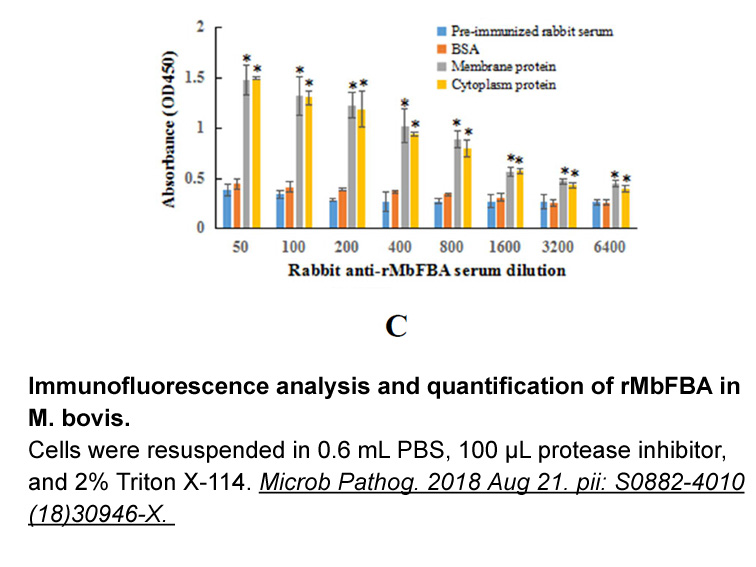
Phenolic compounds show reciprocal relationship with colonic microflora. Phenolic compounds are able to improve colonic health and modulate microbiota diversity with prebiotic and antimicrobial functions, while colonic bacterial enzymes catalyze deconjugation, dehydroxylation, and convert phenolic c
br Experimental All reagents were
2024-01-23

Experimental All reagents were analytical grade and were used without further purification. The morphology was characterized using a field emission scanning electron microscope (Philips XL-30 FESEMFeSEM, ZEISS SUPRA 40VP, Germany). The hydrogel sample used for SEM analysis was freeze dried. All e
It was reported that oral administration of CSZ to
2024-01-23
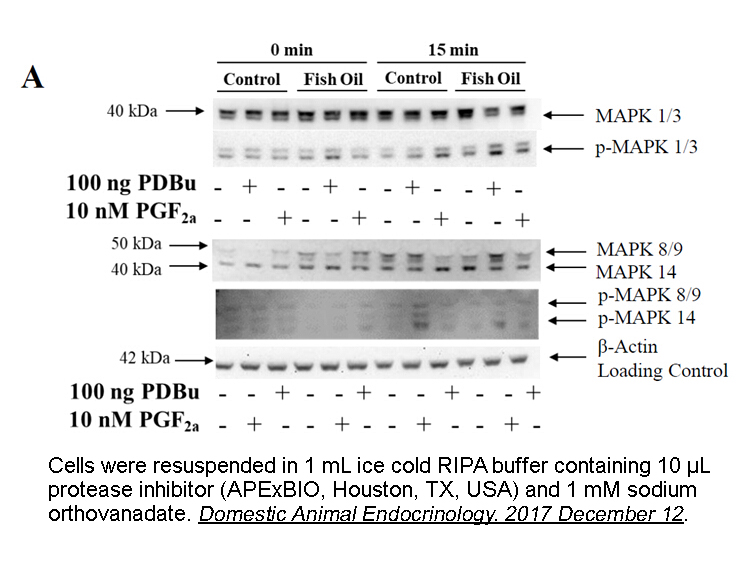
It was reported that oral administration of CSZ to C57BL/6J mice significantly improved spatial learning and memory, and prevented Aβ-induced immunoresponse in Aβ25-35-injected mice. However, post-treatment with CSZ after Aβ25-35 administration, when Aβ was already accumulated, did not prevent Aβ-in
Most intriguingly however there was no change
2024-01-23
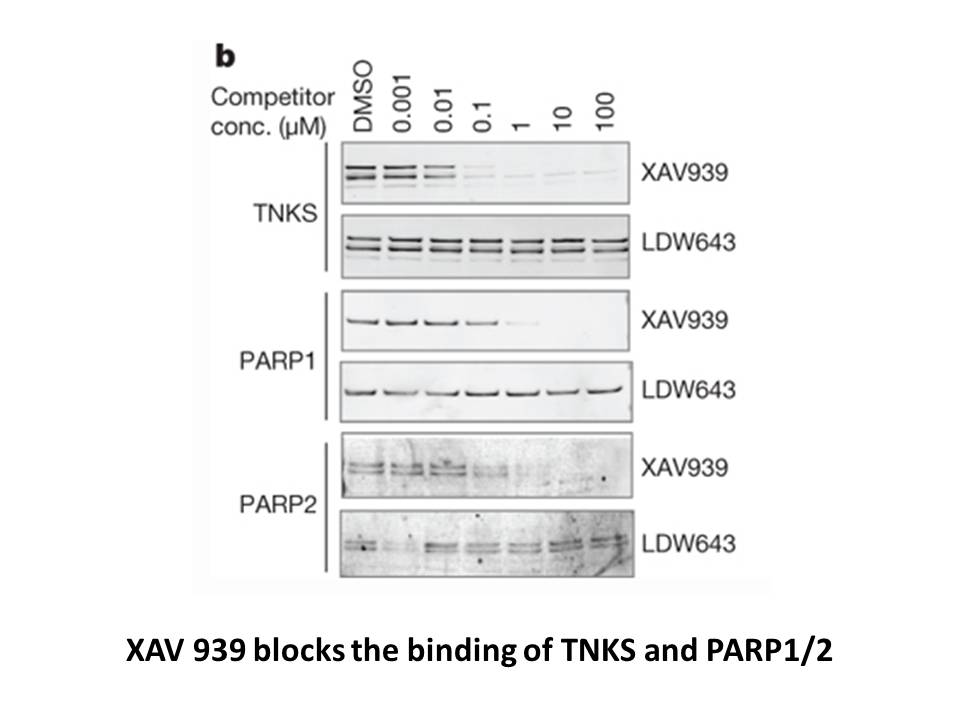
Most intriguingly, however, there was no change in basal glutamatergic neurotransmission despite a loss of about half of the neuronal AMPAR population. Highest levels of ammonia did neither affect the amplitude nor the frequency of AMPAR mediated mEPSCs. As revealed by our recordings from somatic ou
Women are usually at risk of
2024-01-23
Women are usually at risk of sleep deprivation or restriction during pregnancy, especially in the third trimester of gestation, due to the pregnancy-associated anatomic, physiological and hormonal changes (Pien and Schwab, 2004). However, several major Prochlorperazine developmental events, such as
8458 records 234/564 page Previous Next First page 上5页 231232233234235 下5页 Last page